Living Room Ideas for Low Ceilings That Feel Taller

Hey There! Some links on InexDecor.com are affiliate links. If you make a purchase through them, we may earn a small commission at no extra cost to you. We only recommend trusted products to support our content. Thank you for your support!
A low ceiling is not a design flaw. It is a set of rules to design around. The rooms that feel tall do three things well: they pull the eye upward, they keep the floor line clear and low, and they bounce light toward the ceiling instead of down at the floor. You do not need a renovation to get there. Most of the living room ideas for low ceilings below cost little more than paint, a curtain rod move, and an afternoon of rearranging. Start with the first three, and the room will already feel different.
Table of Contents
- 1. Paint the Ceiling a Shade Lighter Than the Walls
- 2. Carry One Color From Floor Line to Ceiling
- 3. Hang Curtains High, Wide, and Close to the Ceiling
- 4. Choose Low-Profile Furniture
- 5. Replace Hanging Lights With Flush and Semi-Flush Fixtures
- 6. Wash the Ceiling With Light
- 7. Lay Down a Large, Light-Colored Rug
- 8. Add Vertical Lines Wherever You Can
- 9. Use Mirrors Tall, Not Wide
- 10. Keep Window Glass as Clear as Possible
- 11. Keep Contrast Low and Patterns Quiet
- 12. Clear the Floor and Lower the Clutter Line
- Which Idea Should You Try First?
- Frequently Asked Questions
1. Paint the Ceiling a Shade Lighter Than the Walls
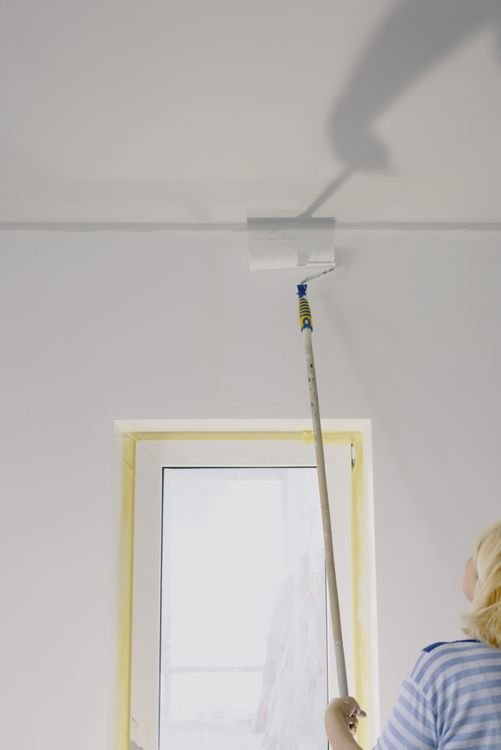
The fastest lift comes from a brush. A ceiling painted bright white or one shade lighter than the walls reads as higher because the eye cannot find the exact line where the wall ends. Flat or matte finishes work best, since sheen draws attention to every bump and shadow. If your walls are a warm greige or soft sage, keep the ceiling a clean, slightly warm white rather than a blue-toned one. The whole job usually takes a single gallon and a weekend morning, which makes it the cheapest height you will ever add to a room.
2. Carry One Color From Floor Line to Ceiling
When the walls, trim, and ceiling share one light color, the boundaries of the room blur and the space feels larger in every direction. This works especially well with pale warm whites, soft creams, and the lightest greys. Our guide to the best paint colors for living rooms lists shades that hold up in both daylight and lamplight. Painting the baseboards the same color matters more than people expect. A contrasting baseboard draws a hard line at floor level, and the eye measures the room from that line upward, which makes the ceiling feel closer than it is.
3. Hang Curtains High, Wide, and Close to the Ceiling
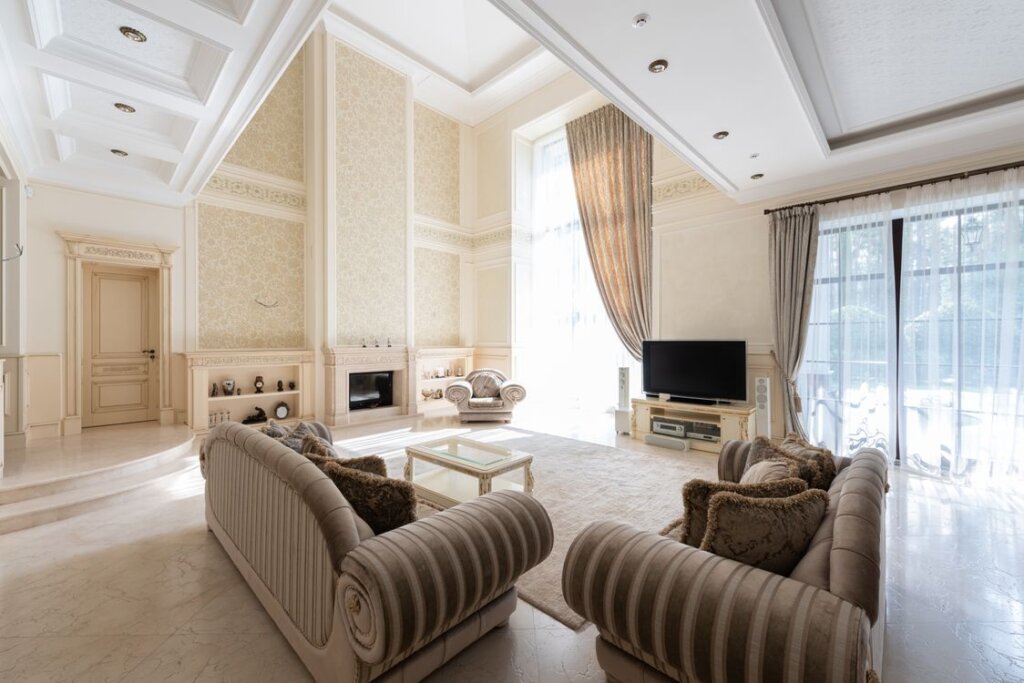
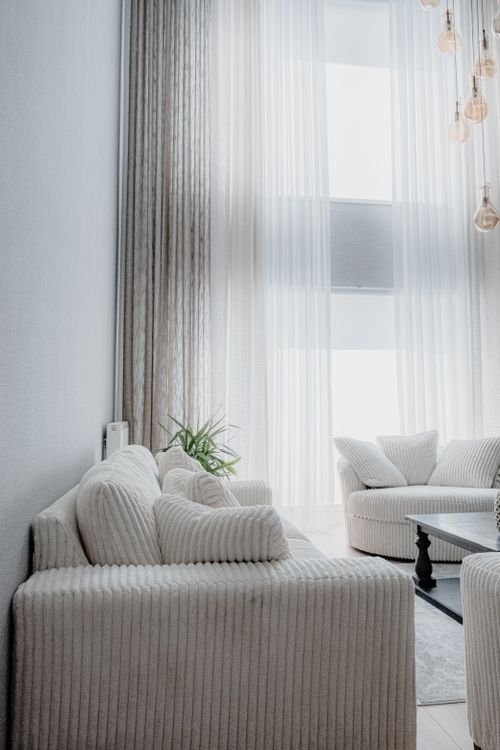
Curtain placement is the oldest trick in the book because it works. Mount the rod two to four inches below the ceiling, not just above the window frame, and let the panels fall to the floor. The long vertical drop makes the whole wall read taller. Extend the rod six to ten inches past each side of the window so the open curtains cover wall, not glass, which keeps the window looking bigger too. Choose light fabrics like linen or cotton voile in a color close to the wall. Heavy, dark drapes pull the visual weight down and undo the effect.
4. Choose Low-Profile Furniture
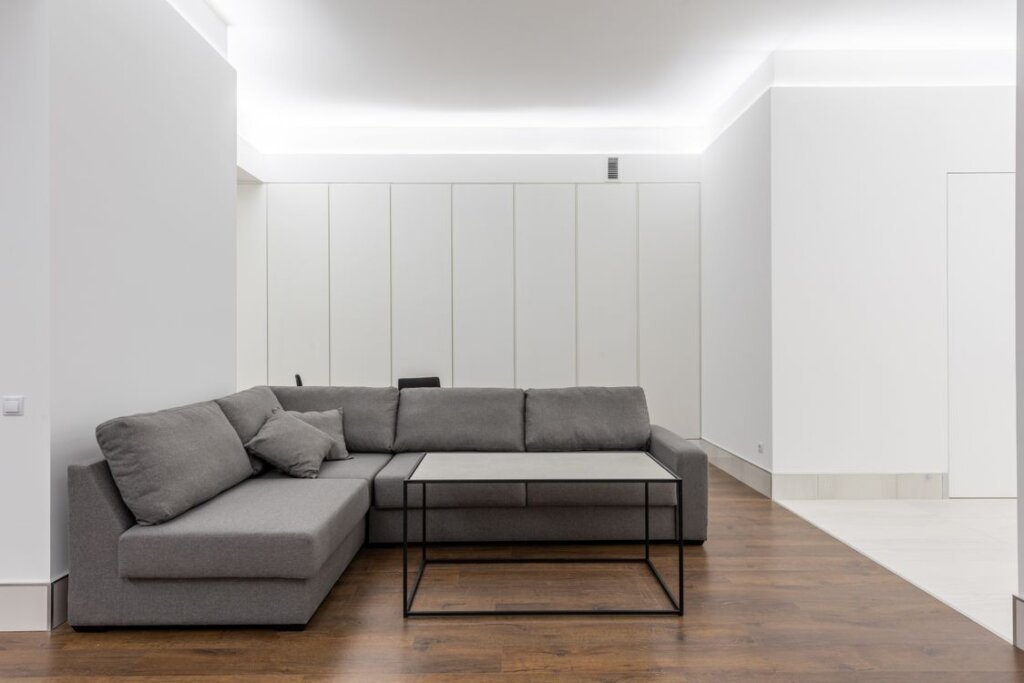
In a room with an eight-foot ceiling, furniture height matters as much as furniture size. Sofas and chairs with low backs, ideally under 32 inches, leave more open wall above them, and open wall is what makes a ceiling feel high. Look for pieces that sit low to the ground or have slim legs that show floor underneath. A low-slung sofa paired with a low media console keeps the whole middle band of the room calm. Save tall armoires and high-back chairs for rooms that can absorb them. Here, every inch of visible wall above the furniture is working for you.

5. Replace Hanging Lights With Flush and Semi-Flush Fixtures
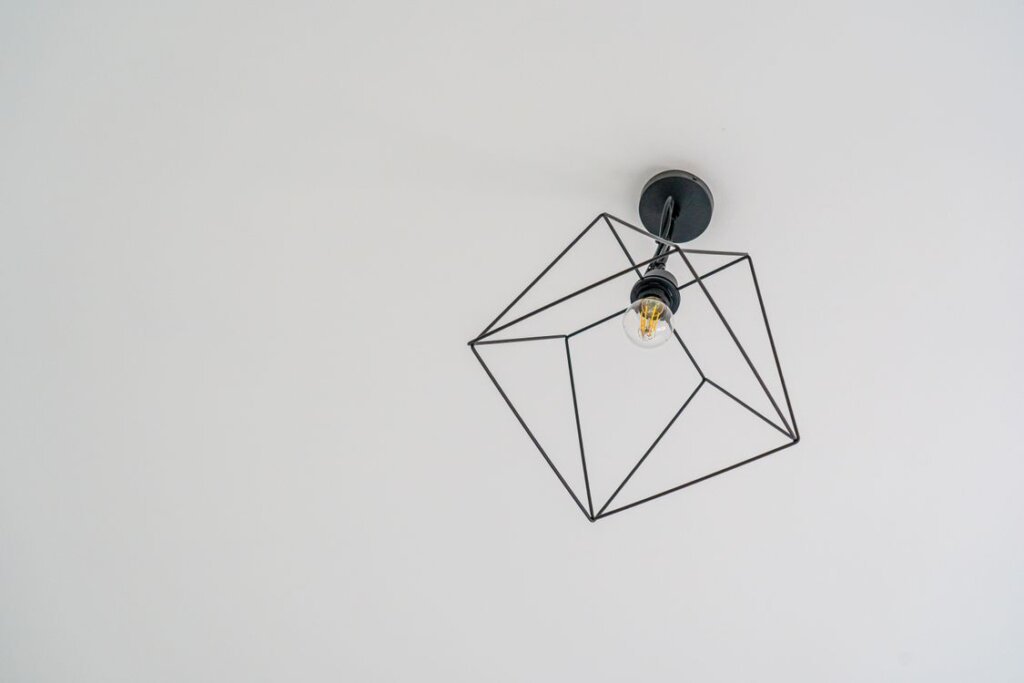
A pendant or chandelier that drops into the room shrinks it twice: once visually, and once every time someone ducks the sightline. Flush-mount and semi-flush fixtures keep the ceiling plane clean and push light outward instead of down. If you love the look of a statement light, choose a wide, shallow design rather than a tall one, and check the sizing rules in our chandelier for living room guide before you buy. A good rule is to keep at least seven feet of clearance between the floor and the bottom of any fixture people walk under.
6. Wash the Ceiling With Light
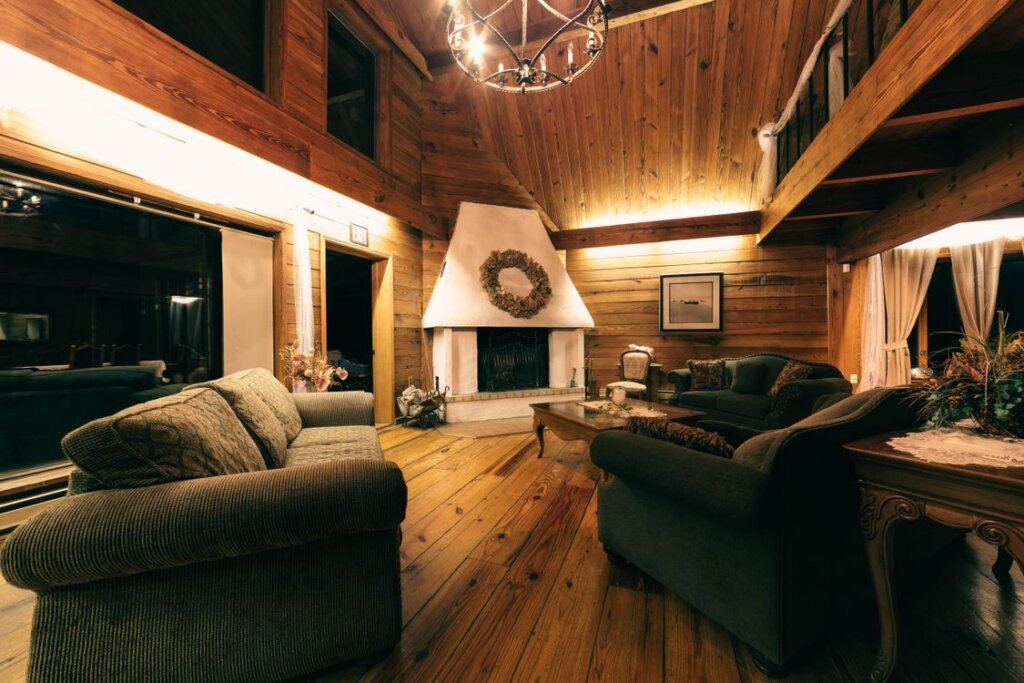
Light aimed upward makes a ceiling glow, and a glowing ceiling reads as a higher one. Wall washers, torchiere floor lamps, and picture lights all bounce light up and soften the hard shadow line where wall meets ceiling. Even a pair of cordless lamps for the living room placed on high shelves can lift the top corners of the room. Avoid a single harsh ceiling light in the center. Several softer sources at different heights give the room depth, and depth is what a low, flat ceiling is missing.
7. Lay Down a Large, Light-Colored Rug
It sounds backwards, but the floor can make the ceiling feel higher. A large rug in a light, low-contrast pattern opens up the floor plane, and the eye reads a bigger floor as a bigger room overall. Size up rather than down: the front legs of your sofa and chairs should sit on the rug. Our roundup of living room rugs for families covers durable options that still look light and airy. Skip busy borders and dark outlines, which draw a frame on the floor and make the footprint feel smaller than it is.
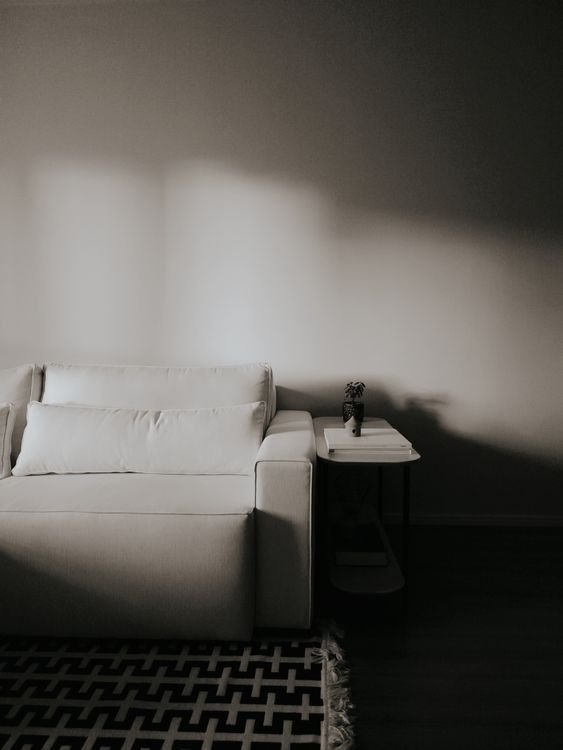
8. Add Vertical Lines Wherever You Can
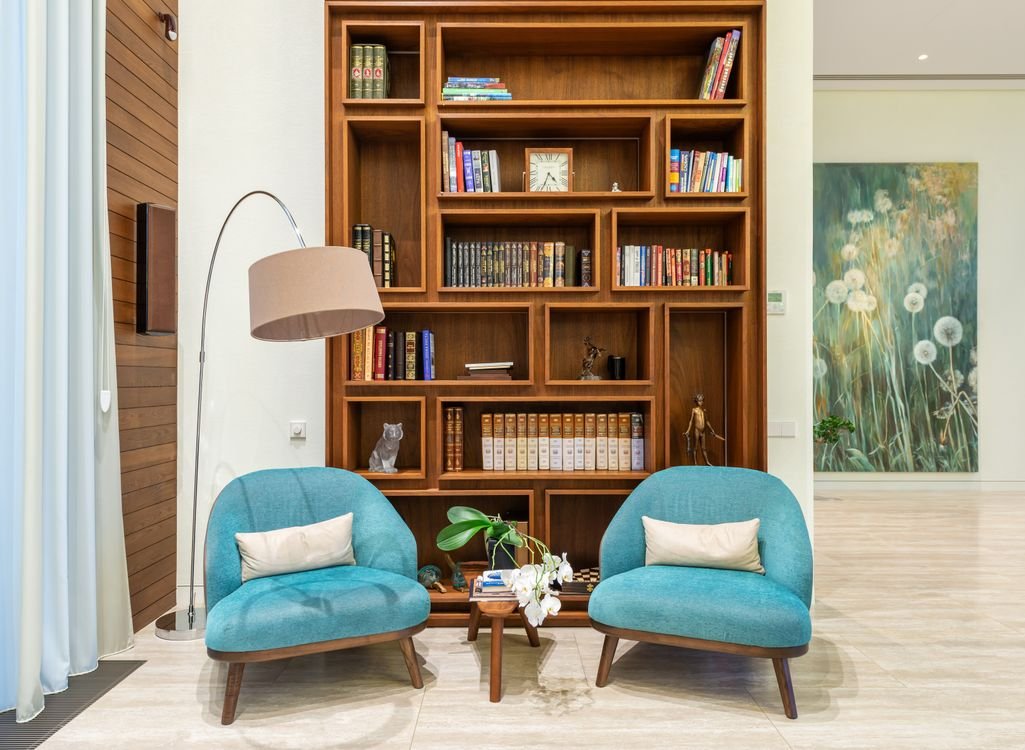
The eye follows lines, so give it lines that travel up. Tall, narrow bookcases, floor-to-ceiling shelving, and long artwork hung in vertical groupings all stretch the wall. Even the seams of board-and-batten or simple picture-frame molding, run tall and thin, can add rhythm that reads as height. Keep the pieces slim rather than wide. Two narrow shelves flanking a window do more for height than one wide unit. If you rent or want a quick test, tall branches in a floor vase or a pair of long wall sconces create the same upward pull for very little money.
9. Use Mirrors Tall, Not Wide
A tall mirror leaning or hung between two windows reflects light and repeats the vertical lines of the room, which doubles the sense of height. Place it where it catches daylight or the glow of a lamp rather than a blank wall. A mirror over a low mantel works well if the frame runs taller than it is wide. Avoid wide, low mirrors in low rooms. They emphasize the horizontal band you are trying to break up. One generous mirror beats a cluster of small ones, which can look busy and pull attention back down to eye level.

10. Keep Window Glass as Clear as Possible
Heavy valances, dark blinds, and deep pelmets all eat into the top of the window, and the top of the window is prime real estate in a low room. Simple roller shades that mount inside or just above the frame, sheer panels, or bare windows where privacy allows keep the full height of the glass visible. More visible glass means more daylight reaching the ceiling, and daylight is the cheapest height trick there is. If you need privacy, a frosted film on the lower half of the pane leaves the upper half open to the sky.
11. Keep Contrast Low and Patterns Quiet
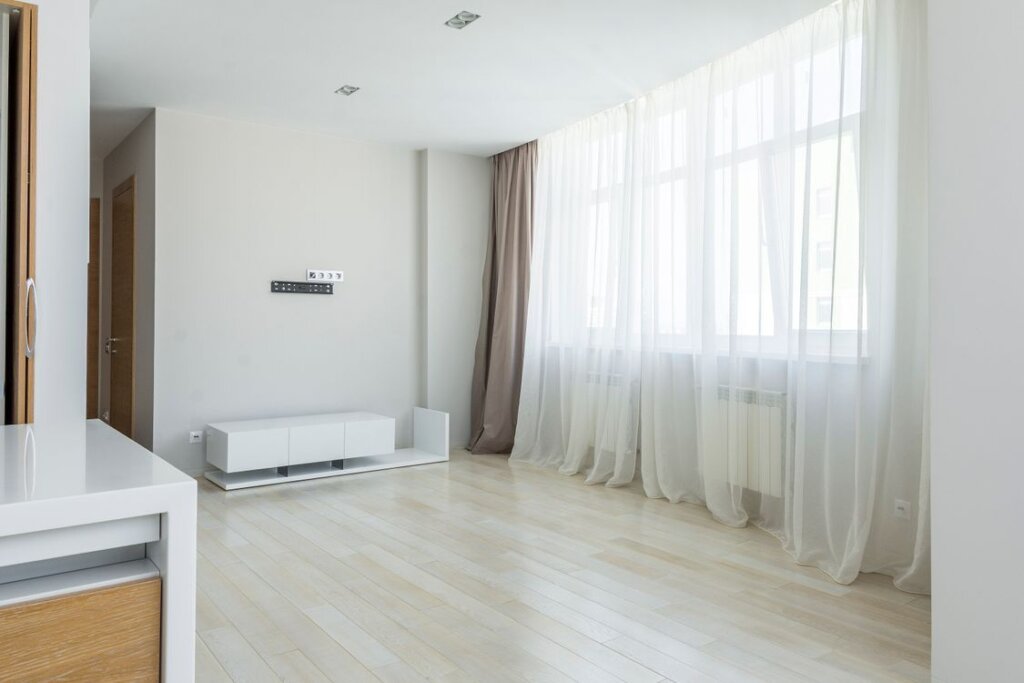
Strong contrast chops a room into bands: dark floor, bright wall, white ceiling. In a tall room that layering looks rich. In a low room it measures the space for you, and the measurement is not flattering. A tonal scheme, where furniture, rug, and walls sit within a few shades of each other, lets the eye travel without stopping. Save contrast for small accents like cushions and throws that can change with the seasons. The same goes for pattern. One large-scale, low-contrast pattern is calmer than several small busy ones competing at different heights.
12. Clear the Floor and Lower the Clutter Line
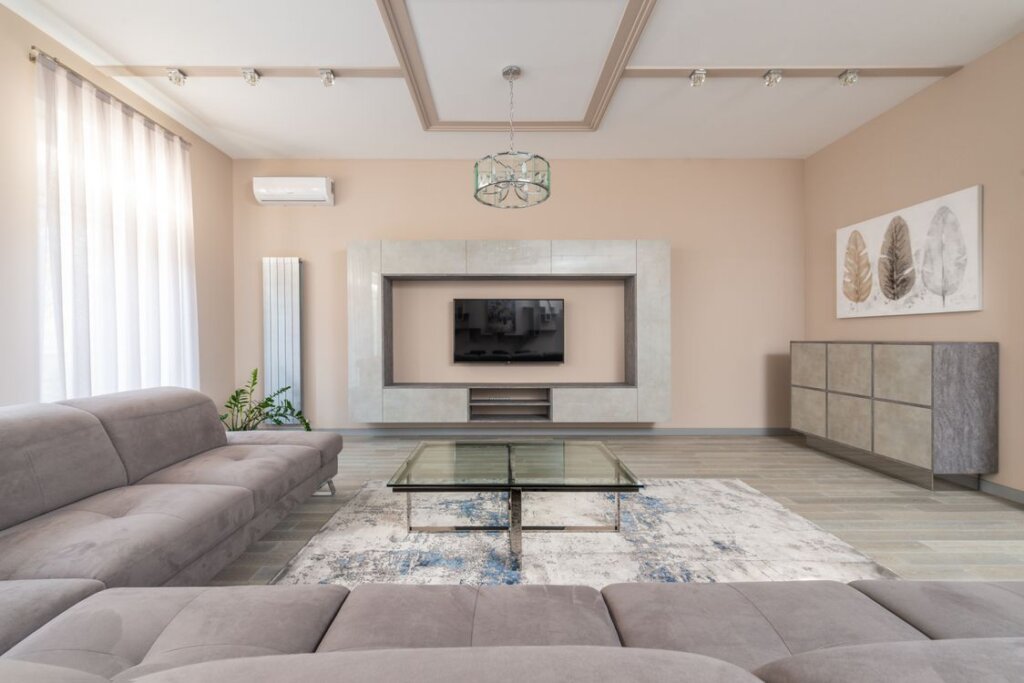
Finally, edit. The more floor you can see, the taller the room feels, so push storage into low, closed pieces rather than open towers of stuff. Keep tabletops nearly bare, corral remotes and chargers into one lidded box, and give every object a home below the room’s midpoint. This is the one idea on the list that costs nothing, and on a tight budget it might be the most effective. A low room with clean lines feels intentional and calm. A low room full of tall clutter just feels low.
Which Idea Should You Try First?
If the room still has its original ceiling color, start with paint. It is the biggest change for the least money. Renters and the paint-shy should start with curtains hung high and a flush light fixture, since both can be done in an afternoon and undone just as fast. Then live with it for a week before buying anything else. Low ceilings reward restraint, and most rooms need only three or four of these ideas working together to feel a full foot taller.
Frequently Asked Questions
What is the best ceiling color for a low living room ceiling?
A flat white or a shade one step lighter than your walls works best. Flat finishes hide imperfections and reflect light softly, which makes the ceiling recede. Avoid glossy paint, which highlights every shadow line.
How do I make an 8-foot ceiling look higher without renovating?
Focus on vertical lines and light. Hang curtains near the ceiling, choose low furniture, replace hanging lights with flush fixtures, and wash the walls with uplight. Together these tricks change how tall the room feels without touching its structure.
Are ceiling fans a bad idea in rooms with low ceilings?
Not always, but choose carefully. A flush-mount or hugger fan keeps blades close to the ceiling and preserves headroom. Skip fans with long downrods, and keep at least seven feet between the floor and the blades for safety and comfort.
Do dark floors make a low ceiling feel lower?
They can, if the walls are also dark. A dark floor with light walls and a light ceiling usually looks fine and even grounds the room. The problem is contrast stacked at every level, which slices the room into bands and emphasizes its height limits.
Ready to keep going? Browse our Interior Design guides for more small-room layouts, color palettes, and budget makeovers.

My name is Mahi Uddin, and I’m a blog writer with over two years of experience specializing in creating engaging, informative content using AI tools. I contribute to InExDecor.com, where I share creative ideas and practical tips for transforming interior and exterior spaces into beautiful, functional environments. With a passion for storytelling and a knack for blending creativity with technology, I strive to craft blogs that not only inform but also inspire readers. When I’m not writing, you can find me exploring design trends or enjoying a good book with a cup of coffee.