Scandinavian Bedroom Design with AI in Coohom: Virtual Staging Tutorial

Hey There! Some links on InexDecor.com are affiliate links. If you make a purchase through them, we may earn a small commission at no extra cost to you. We only recommend trusted products to support our content. Thank you for your support!
Some links on InexDecor.com are affiliate links. If you make a purchase through them, we may earn a small commission at no extra cost to you.
Table of Contents
Introduction
scandinavian bedroom design with AI in Coohom starts with a simple idea: a bedroom should help you sleep, not impress anyone. Scandinavian design is built on that principle: pale walls, light wood, soft textiles, and only the furniture you actually use. Nothing is there to show off. Everything earns its place by making the room calmer, brighter, or easier to live in. That is why it suits bedrooms so well.
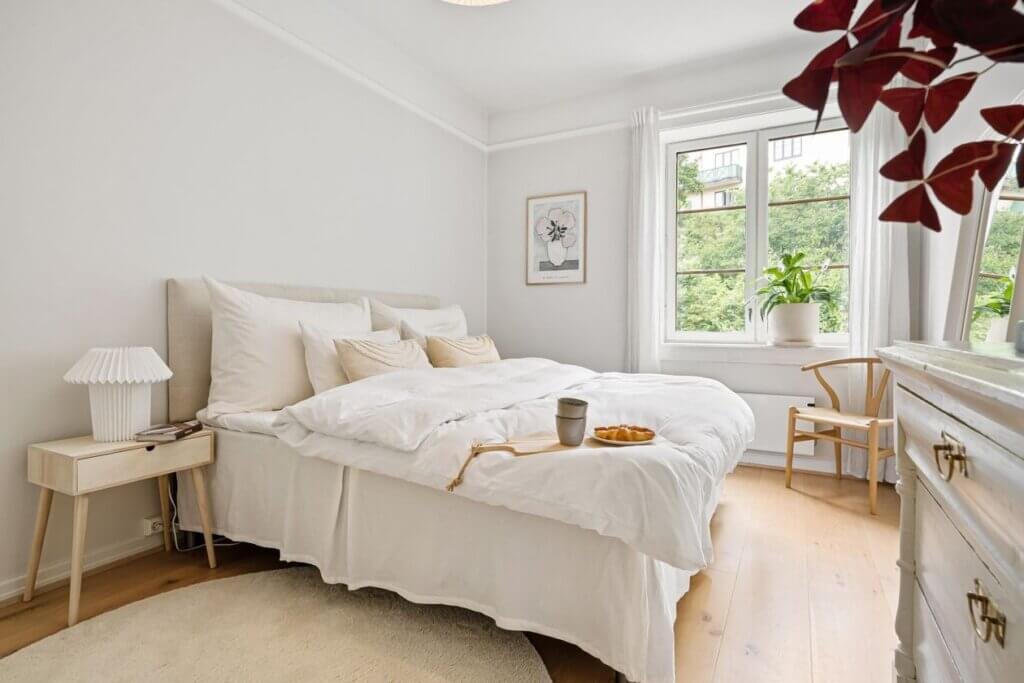
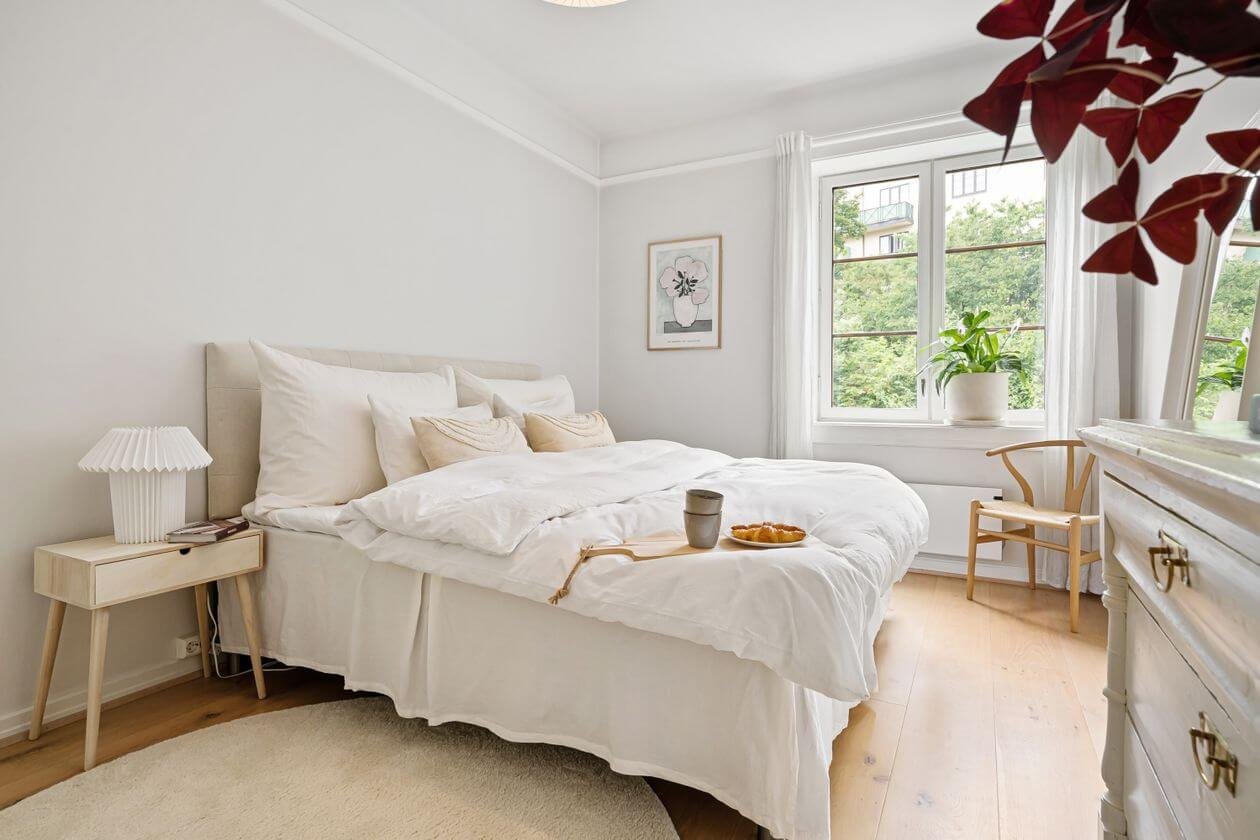
The problem is that a Scandinavian bedroom is easy to describe and hard to get right. Too much white and the room feels cold; too much wood and it feels heavy. The wrong bed position blocks the light, and a rug that is too small makes the room feel unfinished. Virtual staging in Coohom solves this before you spend anything: draw your bedroom to real measurements, place a low wooden bed, test a linen palette, and walk through the result in 3D.
Try Coohom free: Coohom
Key Takeaways
- Start with measurements: draw the room to real size before you choose anything.
- The palette is simple: white or pale grey walls, light wood, white linen, and one muted accent such as sage or dusty blue.
- A low wooden bed, layered textiles, and warm lighting do most of the work.
- Test the bed position, rug size, and lighting in 3D before you buy.
- Refresh a bedroom for under $150, or plan a full change for $600–$1,500.
What Is Scandinavian Bedroom Design?
Scandinavian design comes from the Nordic countries, where winters are long and daylight is precious. Interiors had to stay bright when the sun set early, warm when it was freezing outside, and simple because people spent most of their lives indoors. The result is a look built on light colours, natural materials, and honest function: a room designed for rest, not a showroom.
The palette is the foundation. Walls are white, warm white, or pale grey, bouncing every bit of daylight around the room. The floor and furniture are light wood: pine, ash, birch, or pale oak, with clean lines and no ornament. Textiles add the warmth: white or natural linen bedding, a wool throw, a cotton or jute rug, and sheer curtains. One muted accent appears in two or three places only. That restraint is what makes the room feel calm.
Function matters as much as looks. A Scandinavian bedroom keeps furniture to what the room needs: a bed, bedside tables, a wardrobe, and perhaps a bench or a chair. Storage is closed and quiet, so the eye rests on empty surfaces. Clutter is the enemy, too many objects make a small room feel smaller. Lighting is layered and warm: a ceiling light, a bedside lamp, and daylight from the window.
The style is also practical: a simple wooden bed frame, white linen, a wool throw, and a pale rug deliver most of the look. What matters is the discipline: pale colours, light wood, natural textiles, empty space, and AI staging lets you practise it on screen, where mistakes cost nothing.
Step-by-Step Virtual Staging Tutorial in Coohom
Virtual staging means furnishing an empty 3D room on screen, testing ideas, and rendering the result before you move a single piece of furniture. Follow these six steps in order.
Step 1: Measure the real bedroom
Measure the length and width of the room, the ceiling height, and the position and size of every window and door, noting which way each door swings. Then measure the walkways you must keep: at least 60 cm beside the bed, and 90 cm in front of the wardrobe so the doors open fully. Write the numbers down, only real measurements keep a bed from blocking a door.
Step 2: Draw the floor plan in Coohom
Open Coohom and draw the walls to the exact measurements from Step 1, adding the windows, doors, and their swing arcs. Place the bed first, against the longest wall, with the headboard furthest from the entrance. Leave the 60 cm walkway beside it, then add the bedside tables and wardrobe and check the walkways in 3D.
Step 3: Choose the bed and the main furniture
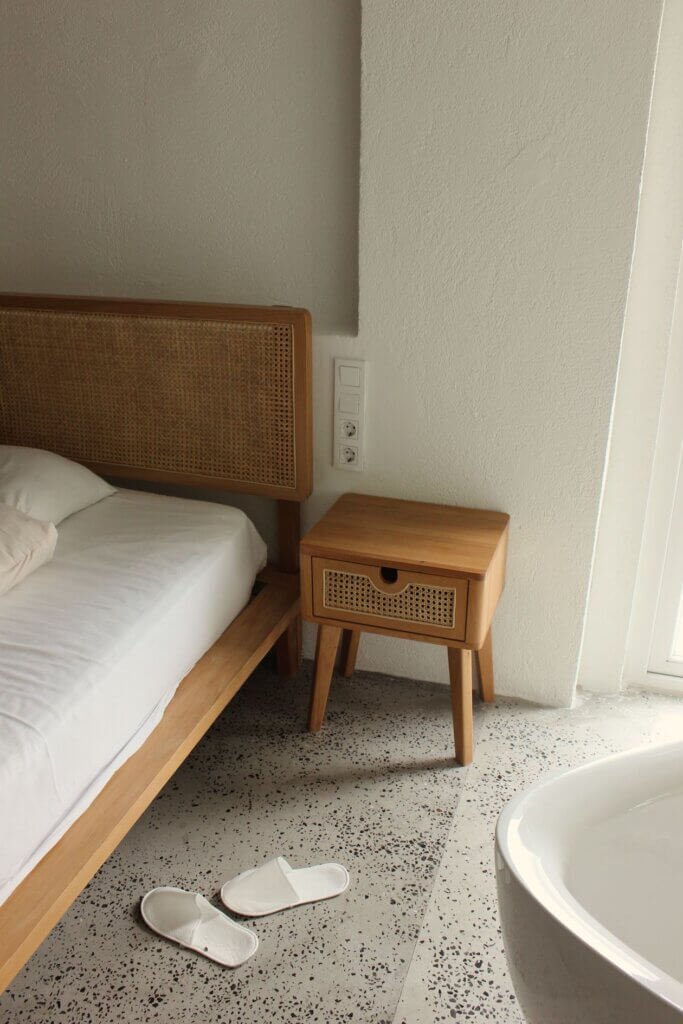
The bed is the room. Choose a low wooden bed frame in pale ash, pine, or birch, low beds make the ceiling feel higher and the room calmer, with a simple headboard in the same wood. Add one bedside table on each side, or a single table and a wall shelf if space is tight. The wardrobe should be plain and flat-fronted in white or pale wood, with sliding doors if the room is narrow. Keep the count low: bed, tables, wardrobe, one bench or chair at most.
Step 4: Apply the Scandinavian palette and textiles
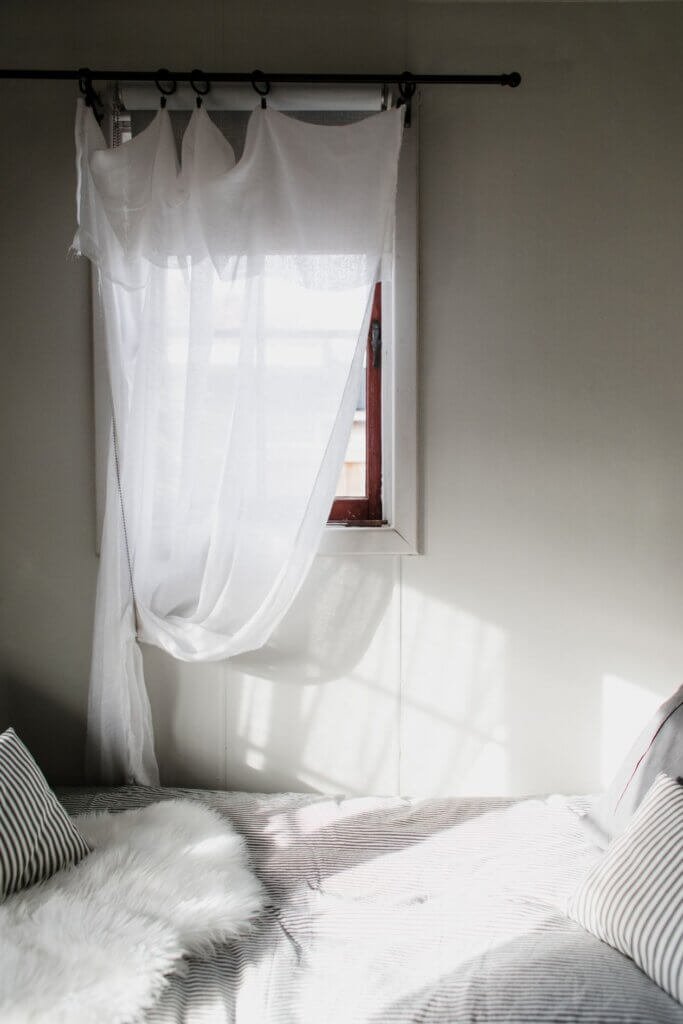
Paint the walls warm white and keep the floor light wood. Dress the bed in white or natural linen: a fitted sheet, a linen-look duvet cover, two sleeping pillows, and one or two cushions in the accent colour. Lay a wool throw across the foot of the bed and a cotton or jute rug beside it. Hang sheer white curtains to the floor. Keep the accent to two or three items only, then render in daylight and evening light: cold means add a textile, busy means remove an object.
Step 5: Layer the lighting
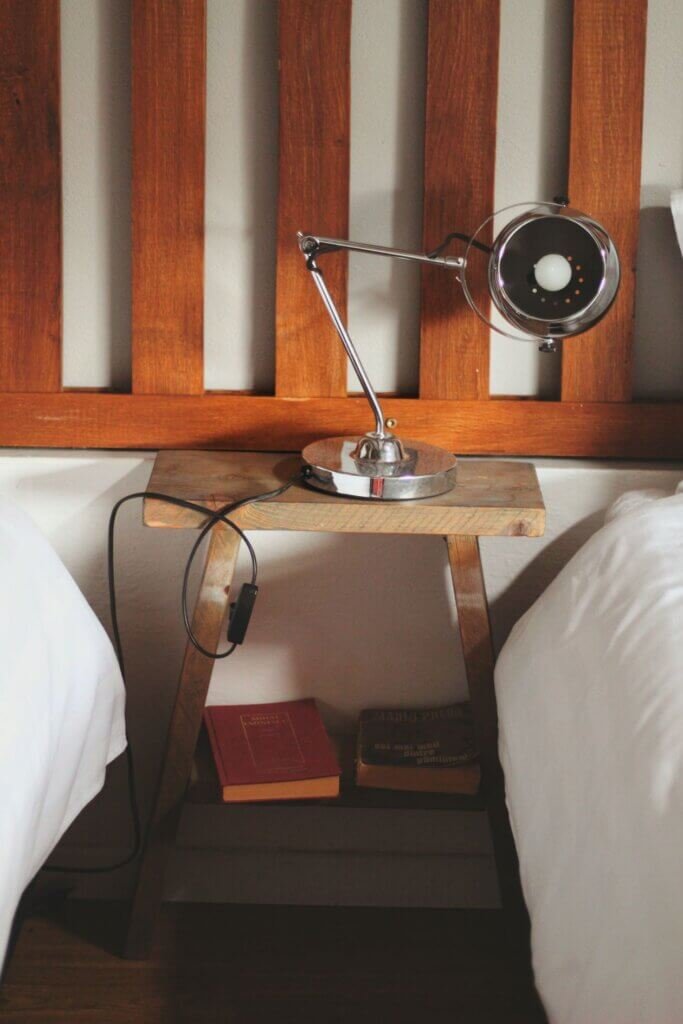
A Scandinavian bedroom needs three layers of light. Daylight first: keep the window clear, use sheer curtains, and place a mirror opposite the window if the room is dark. General light should be one warm ceiling light or a simple pendant with a paper or linen shade. Task light should be warm and focused: a bedside lamp on each side, or a wall light above the bed, with warm 2700K bulbs. At night the room should glow, not glare. Check the render at dusk: grey walls mean the bulbs are too cool, dark corners mean add a small lamp. For floor lamp ideas, see our best floor lamps for reading guide.
Step 6: Stage the details and render the final design
Staging is the last ten percent. What makes the room feel lived in rather than empty. Place one book and a small plant on the bedside table, a vase on the wardrobe, and a folded throw on the bench: two or three objects per surface at most. Then render from the doorway, as you would see it walking in, and from the bed, as you will wake up to it. Save both as your shopping list: every piece has a size, a colour, and a place.

Try Coohom free: Coohom. Draw your bedroom, stage it in Scandinavian style, and render it before you buy anything.
Before and After Staging Ideas
A before-and-after render is the fastest way to see what virtual staging is worth. Start with your current bedroom as the “before”: a bed pushed against the wall, mismatched bedding, a dark rug, and one ceiling bulb. Then generate the “after” in Coohom from the same camera angle. The most dramatic changes are usually the cheapest: white linen, a wool throw, a pale rug, sheer curtains, and a warm bedside lamp.
A small bedroom before and after
In a small bedroom, the before is usually clutter: a bed that fills the room, clothes on a chair, a dark wardrobe, and no clear floor. The after rearranges the same furniture: the bed centred on the longest wall with 60 cm of walkway, the chair replaced by a slim bench, the wardrobe doors painted white, and a pale rug under the bed. Same size, but more floor, more light, and a clear path to the window.
A large bedroom before and after
In a large bedroom, the before is usually emptiness: a bed floating in a big floor, bare walls, and one rug that is too small. The after fills the space with purpose: a reading chair and floor lamp in one corner, a bench at the foot of the bed, a large rug anchoring bed and bench, and art in a straight line at eye level. Every zone has a job.
For the same method in a larger space, see our modern living room design with AI in Planner 5D guide.
Layout Ideas for Small and Large Bedrooms
A bedroom layout is decided by three things: the bed, the wardrobe, and the walkways. Get those right and the rest follows. Scandinavian design suits both small and large bedrooms, but the rules change with the size.
Layouts for small bedrooms
In a small bedroom, the bed goes against the longest wall, headboard centred if the room allows it, or pushed to one side if it is very narrow. One bedside table is enough, on the side you get out of. The wardrobe should have sliding doors and sit opposite the bed, so you can open it without blocking the walkway. Keep the floor visible: a rug beside the bed, no furniture in the middle of the floor, and store up, not out: tall shelving, hooks behind the door, under-bed boxes. For more ideas, see our scandinavian bedroom ideas for small rooms guide.
Layouts for large bedrooms
In a large bedroom, the bed can float: place it in the centre of the longest wall with space on both sides, and use the extra floor for zones. A reading corner with a chair, floor lamp, and side table works in one corner; a bench at the foot of the bed marks the end of the sleeping zone; a dressing area with a mirror fits near the wardrobe. The rug should be at least 60 cm wider than the bed on each side. Use furniture to define zones, not to fill space.
Common Mistakes to Avoid
The most common mistake is too much white with nothing warm: white walls, white bedding, white furniture, a room that feels like a hospital. Light wood and wool are the cure: a wooden bed frame, a wool throw, a jute rug. The second is a rug that is too small: measure the bed first, buy the rug second. The third is dark furniture in a small bedroom: keep the large pieces pale and save dark colours for small accents. The fourth is cool white light. A 4000K bulb makes warm white walls look grey, so use warm 2700K throughout. The fifth is clutter on every surface: keep one lamp, one book, and one plant per surface. The sixth is buying the bedding before the bed: stage the bed in Coohom first, then choose the textiles to match.
Budget Tiers
Budget (under about $150): White or natural linen-look bedding, a wool-look throw, warm 2700K bulbs, and sheer curtains. Spend on the bedding and the throw first. They cover the largest surface in the room.
Mid-range (about $150–$600): Add a pale cotton or jute rug, a wooden bedside table, a paper or linen pendant light, and a plant. Keep the existing bed frame and wardrobe, and change only what you touch every day.
Full change ($600–$1,500+): A low wooden bed frame, a flat-front wardrobe with sliding doors, a large rug, a bench at the foot of the bed, and a full set of linen bedding. Stage the design in Coohom first, a bed frame cannot be returned as easily as a cushion.
Coohom vs Planner 5D vs Homestyler
| Feature | Coohom | Planner 5D | Homestyler |
|---|---|---|---|
| Best for bedrooms | Photorealistic staging and renders | Accurate floor plans and measurements | Fast style ideas from a photo |
| Starting point | Draw a plan or use a template | Draw walls and a floor plan | Upload a bedroom photo |
| AI tools | AI design and rendering tools | AI Studio, Smart Wizard | AI Styler, Spark, AI Planner |
| Rendering | Very photorealistic | Good, 4K on paid plans | Good, fast renders |
| Ease of use | Easy, with more pro options | Easy once the plan is drawn | Very easy to start |
| Free plan | Core tools | Core design tools | AI restyles |
| Try it | Coohom | Planner 5D | Homestyler |
Coohom wins for bedroom staging because its renders show the small details: the texture of linen, the grain of light wood, a bedside lamp at dusk. Planner 5D suits whole-home renovations where measurements decide everything; Homestyler is fastest for testing a style from a photo. For living-room staging in the same palette, see our scandinavian living room design with AI in Planner 5D guide.
Frequently Asked Questions
What makes a bedroom Scandinavian?
A Scandinavian bedroom uses pale walls, light wood, natural textiles, and minimal furniture to create a calm, bright room. The palette is white or warm white, light wood, white or natural linen bedding, and one muted accent. The furniture is simple: a low bed, bedside tables, a plain wardrobe, with no ornament. The key is restraint: every piece earns its place, surfaces stay clear, and lighting is warm and layered.
How do I stage a bedroom virtually in Coohom?
Measure your bedroom and draw the floor plan in Coohom to those exact numbers. Place the bed first, against the longest wall, then the bedside tables and wardrobe, keeping 60 cm of walkway beside the bed. Apply the palette: warm white walls, light wood, white linen, and add a rug, a throw, and sheer curtains. Layer the lighting, then render the room from the doorway and from the bed.
What colours work best in a Scandinavian bedroom?
Warm white, pale grey, light wood, and white linen work best, with one muted accent such as sage green, dusty blue, or clay. Keep the walls pale so daylight bounces around the room, add warmth through light wood and wool, and use the accent in only two or three places: a throw, a cushion, a vase. Avoid dark walls and furniture: they absorb light and shrink the room.
Can I design a small Scandinavian bedroom with AI?
Yes, and small bedrooms are where AI staging helps most, because every centimetre matters. Draw the room to real measurements in Coohom, test the bed against each wall, and check the walkways in 3D before you buy anything. Use a low bed, sliding wardrobe doors, and storage that goes up rather than out. A pale palette, a mirror opposite the window, and one rug beside the bed will make the room feel bigger than it is.
What is the best bed for a Scandinavian bedroom?
The best bed is a low wooden frame in pale ash, pine, or birch, with a simple headboard in the same wood. A low bed makes the ceiling feel higher and the room calmer, and light wood keeps the palette bright. Dress it in white or natural linen, add a wool throw at the foot, and keep the bedside to one lamp, one book, and one plant. Avoid tall upholstered headboards and dark wood frames.
Is Coohom free for virtual staging a bedroom?
Yes, Coohom has a free plan that covers floor plans, basic 3D design, and standard renders. You can draw a real bedroom, place furniture to scale, test colours and layouts, and create useful 3D views without paying. Paid plans add higher-quality renders and premium furniture models. Start free, stage one bedroom properly, and upgrade only if you need photorealistic renders for a client.

Conclusion
scandinavian bedroom design with AI in Coohom is not about buying a new bedroom. It is about editing one until it does its job: pale walls that catch the light, a low wooden bed, linen and wool where your hands land, and nothing that does not help you rest.
Start with the plan: measure the bedroom, draw it in Coohom, place the bed first, test the walkways in 3D. Then add the palette, the rug, and the lighting, one thing at a time, until the room feels calm. Your bedroom does not need to be bigger. It needs to be staged.
Try Coohom free: Coohom. Draw your bedroom, stage it in Scandinavian style, and see your new room in 3D tonight.

My name is Mahi Uddin, and I’m a blog writer with over two years of experience specializing in creating engaging, informative content using AI tools. I contribute to InExDecor.com, where I share creative ideas and practical tips for transforming interior and exterior spaces into beautiful, functional environments. With a passion for storytelling and a knack for blending creativity with technology, I strive to craft blogs that not only inform but also inspire readers. When I’m not writing, you can find me exploring design trends or enjoying a good book with a cup of coffee.