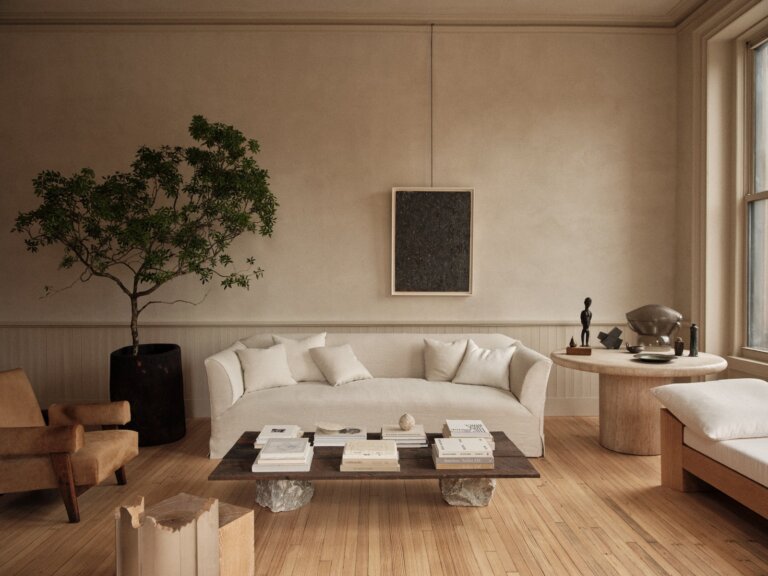
Interior design blends creativity and functionality. It requires a mix of skills and knowledge.
Becoming an interior designer is more than just having a good eye for design. It involves understanding space, color theory, and the latest trends. You also need to know about materials, furnishings, and lighting. Knowledge of building codes and safety regulations is essential.
Communication skills are crucial for working with clients and contractors. Technical skills in design software add value. In this blog post, we’ll explore the key areas of knowledge needed to thrive in this exciting field. Whether you’re dreaming of a career change or just curious, keep reading to learn more about the world of interior design.
Introduction To Interior Design
An interior designer plans and decorates indoor spaces. They choose colors, furniture, and decorations. They make spaces look good and feel good. Designers listen to clients’ needs. They create designs that match those needs. They work with architects and builders. They make sure everything fits well. They also stay updated with new trends and styles.
Interior design makes homes and offices look nice. It also makes them comfortable. Good design improves mood and productivity. It uses space in the best way. It helps people feel relaxed and happy. Design can be simple or fancy. Both are important. Good design can make small spaces look bigger. It can also make big spaces feel cozy.
Educational Background
A degree in interior design can help you start your career. Many colleges offer these programs. You will learn about design principles, color theory, and space planning. Some schools also teach computer-aided design (CAD). This is important for creating detailed plans.
Courses in architecture, furniture design, and lighting are also useful. You will need to complete projects and build a portfolio. This shows your skills to future employers.
Many places require certifications or licenses to work as an interior designer. You might need to pass an exam. This proves your knowledge and skills. The National Council for Interior Design Qualification (NCIDQ) is a common certification.
Some states have specific requirements. Check the rules where you want to work. Continuing education is also important. This helps you stay current with trends and new techniques.
Design Principles
Balance means that the room feels even. Nothing seems out of place. Symmetrical balance uses matching items on both sides. Asymmetrical balance uses different items but still feels even. Radial balance focuses on a central point. All parts match in harmony.
Color affects the mood of a room. Warm colors like red and yellow make spaces feel cozy. Cool colors like blue and green feel calm. Neutral colors like white and gray match well with other colors. Complementary colors are opposite on the color wheel. They make a room pop. Analogous colors are next to each other on the wheel. They create a smooth flow.

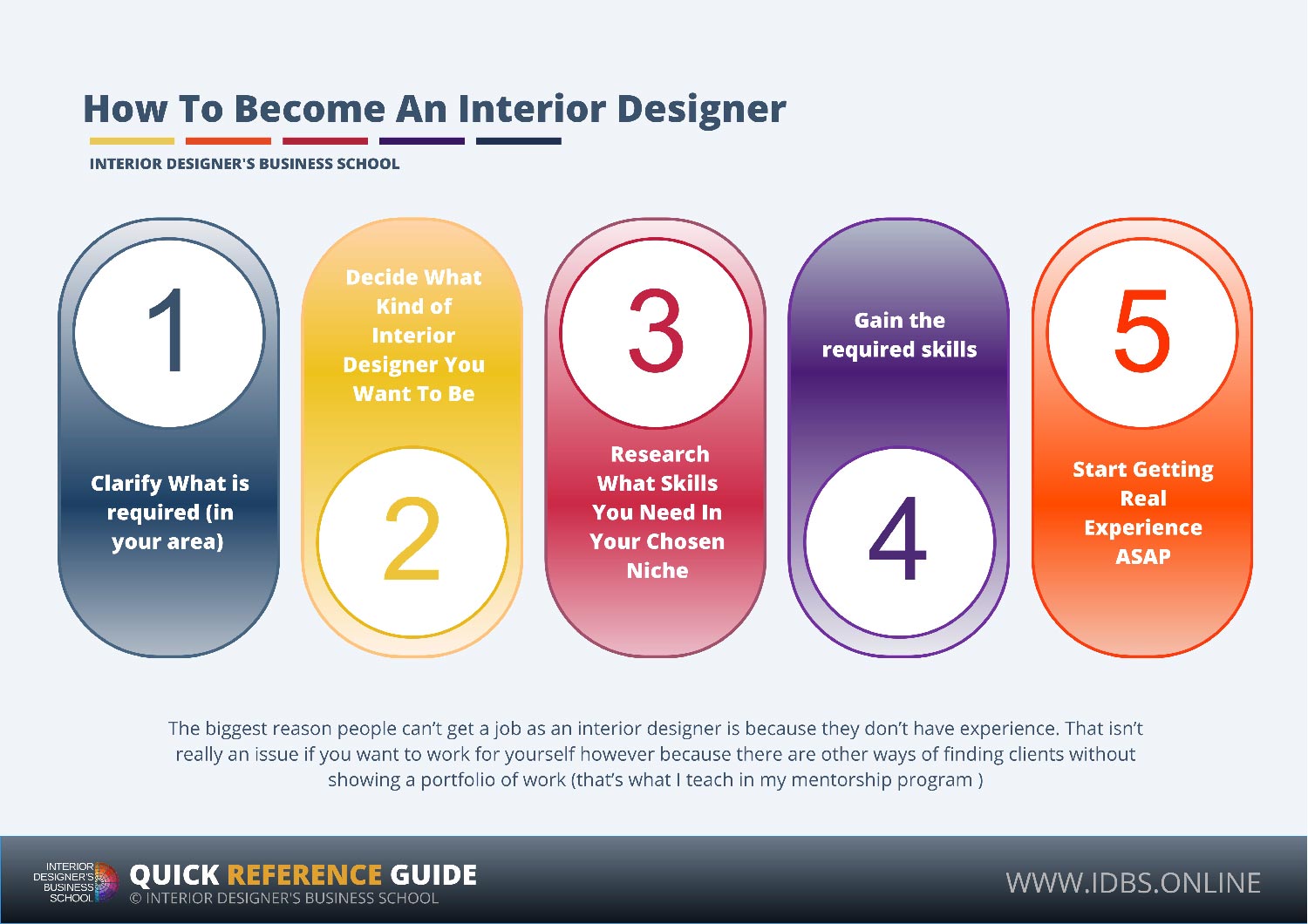
Credit: www.idbs.online
Technical Skills
Interior designers need to draft and draw plans. Detailed sketches show the layout of a space. These drawings guide construction. Clear drawings help communicate ideas to clients and builders. Accuracy is important.
CAD software is a key tool for designers. It helps create detailed plans and 3D models. These models are very realistic. Clients can see how the space will look. Learning CAD takes practice, but it’s essential for modern design work.
Creative Skills
Interior designers need to be very creative. They must think outside the box. This helps them design unique spaces. Original ideas make a space stand out. Innovation is key in this field. Always explore new design trends. Use different materials and colors. Mix old and new styles. Creativity attracts clients and makes projects fun.
Detail is very important in interior design. Small elements can change a room’s look. Designers must notice every tiny part. This includes color, texture, and lighting. Perfect alignment of furniture matters. Even the smallest mistake can ruin a design. Being careful ensures a beautiful and functional space.
Project Management
Interior designers need to plan their time well. Each task must be done on schedule. This helps avoid delays. Good time management keeps clients happy. It also ensures projects are completed on time.
Interior designers must stick to a budget. They need to know the cost of materials. This ensures they do not overspend. Allocating resources wisely is also key. This means using the right materials for each part of the project. Proper budgeting and resource allocation save money and time.
Client Communication
Listening to clients is key. Pay attention to their likes and dislikes. Ask clear questions. Repeat what they say to show you understand. Make notes of important points. This helps in creating designs that match their vision. Clear communication builds trust.
Presenting ideas clearly is important. Use simple language. Show samples or mood boards. Visual aids make ideas clear. Practice speaking confidently. Make eye contact. Answer questions patiently. Good presentation skills can win clients.
Staying Updated
Interior designers must know current trends and styles. This helps create modern spaces. Reading design magazines is helpful. Blogs and social media also provide ideas. Visiting design shows can be inspiring. Watching TV shows about interior design is useful. Learning about different cultures is also important. Each culture offers unique styles.
Networking with other designers is key. It opens up new opportunities. Joining design groups can be helpful. Attending workshops and seminars is beneficial. These events offer new skills and knowledge. Online courses are also a good option. They are flexible and often affordable. Reading books about design is another way to learn. Never stop learning in this field.
Tips For Aspiring Interior Designers
A strong portfolio is key for any aspiring interior designer. Include your best work. Show a range of styles. Use high-quality photos. Make sure the presentation is neat. Highlight your unique ideas. Add descriptions for each project. This shows your thought process. Update your portfolio often. Keep it fresh and relevant.
Gain experience through internships or part-time jobs. Work with experienced designers. Learn from them. Volunteer to design for friends or local businesses. This builds your confidence. It also helps you understand client needs. More experience makes you a better designer.
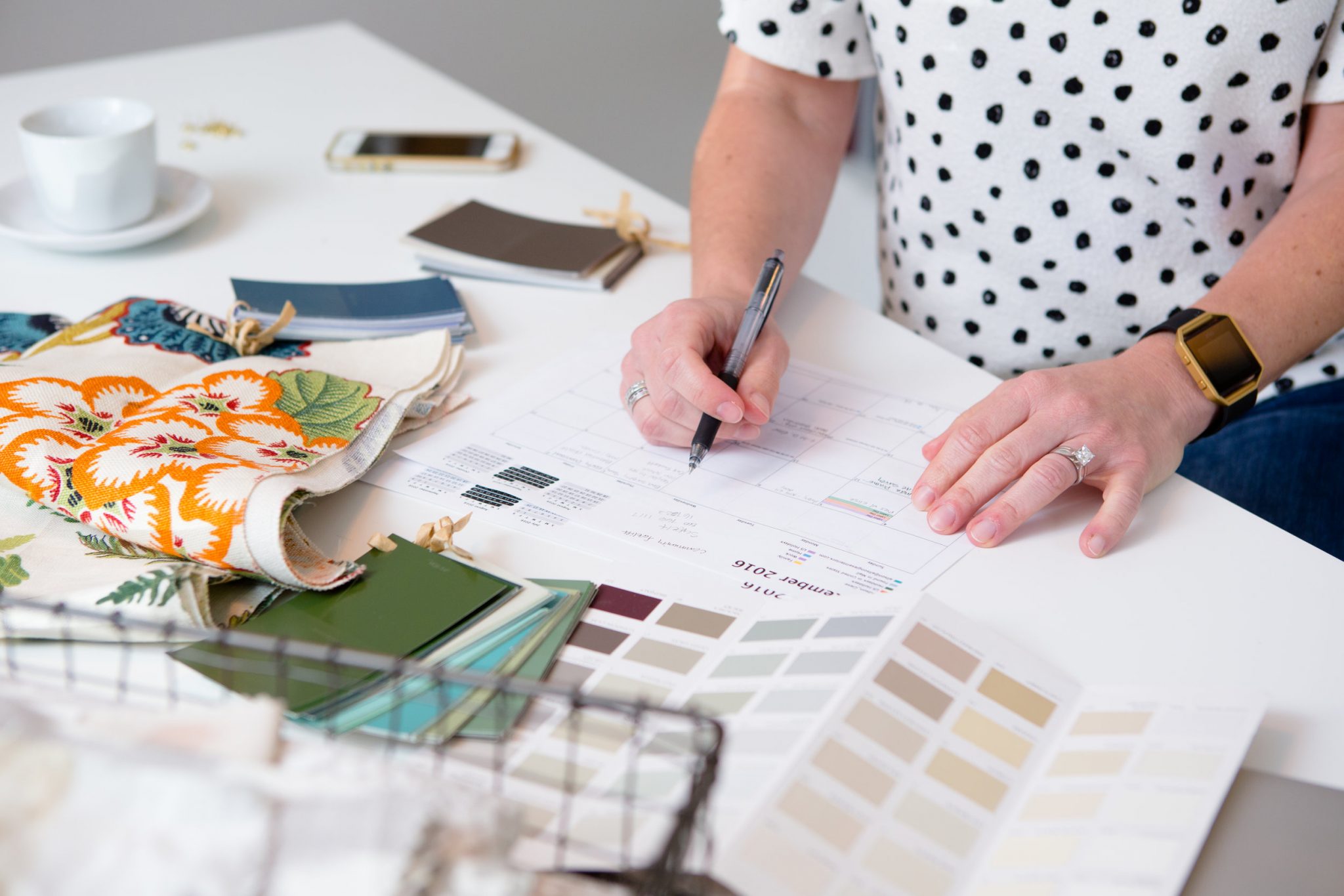
Credit: foyr.com

Credit: www.thelittledesigncorner.com
Frequently Asked Questions
What Skills Are Needed For Interior Design?
An interior designer needs creativity, technical skills, and an eye for detail. They should understand color theory, spatial arrangements, and design software. Communication skills are also essential.
Is Formal Education Required For Interior Design?
Yes, a formal education is often required. Many interior designers hold a bachelor’s degree in interior design or a related field. Certification can also enhance credibility.
What Software Do Interior Designers Use?
Interior designers frequently use software like AutoCAD, SketchUp, and Adobe Creative Suite. These tools help in creating detailed designs and presentations.
What Is The Role Of An Interior Designer?
Interior designers plan and create functional, aesthetically pleasing spaces. They consider client needs, budget, and building codes. They also coordinate with contractors and suppliers.
Conclusion
Becoming an interior designer requires diverse skills and knowledge. Understand design principles. Learn about color theory. Study space planning. Know different materials and finishes. Develop good communication skills. Stay updated with trends. Gain basic business skills. Practice creativity. Seek hands-on experience.
With dedication and passion, you can succeed.

My name is Mahi Uddin, and I’m a blog writer with over two years of experience specializing in creating engaging, informative content using AI tools. I contribute to InExDecor.com, where I share creative ideas and practical tips for transforming interior and exterior spaces into beautiful, functional environments. With a passion for storytelling and a knack for blending creativity with technology, I strive to craft blogs that not only inform but also inspire readers. When I’m not writing, you can find me exploring design trends or enjoying a good book with a cup of coffee.