Luxury Vinyl Plank vs Hardwood Flooring Cost: 2026 Price Comparison & Verdict

Hey There! Some links on InexDecor.com are affiliate links. If you make a purchase through them, we may earn a small commission at no extra cost to you. We only recommend trusted products to support our content. Thank you for your support!
Luxury Vinyl Plank vs Hardwood Flooring Cost: 2026 Price Comparison & Verdict
Luxury vinyl plank vs hardwood cost is the first question most homeowners ask before replacing a floor, and the answer depends on far more than the price on a box: a cheap material can become expensive once you add underlayment, trim, labour, waste, and repairs, while a costly material can be good value if it lasts for decades. Luxury vinyl plank, usually called LVP, is cheaper to buy and install. Hardwood costs more at the start, but it can last for decades, be refinished several times, and add resale appeal. This guide breaks down material, installation, and lifetime costs for 2026, room by room.
Measure every room first: pets, children, heavy furniture, sunlight, and a damp subfloor all change the true cost. A cheap floor can cost more if it needs early replacement, while an expensive floor can be cheaper over twenty years if it only needs a refinish.

Table of Contents
- Key Takeaways
- 1. Luxury Vinyl Plank vs Hardwood Cost at a Glance
- 2. Price by Room Size: What Each Room Really Costs
- 3. Installation Costs: DIY LVP vs Professional Hardwood
- 4. Durability Compared: Water, Scratches, Pets, and Sunlight
- 5. Maintenance and Lifetime Costs
- 6. Resale Value: Which Floor Helps You Sell?
- 7. Budget Tiers and Costly Mistakes to Avoid
- 8. Buying Guide and Our Picks
- 9. Frequently Asked Questions
- Conclusion
Key Takeaways
- LVP material: $2–$7 per sq ft. Hardwood material: $6–$15 per sq ft.
- Installed LVP: $4–$10 per sq ft. Installed hardwood: $10–$20+ per sq ft.
- LVP wins on water resistance, easy installation, and low maintenance.
- Hardwood wins on lifespan, refinishing, and resale value in main living areas.
- For kitchens and bathrooms, LVP is the safer choice; for living rooms and bedrooms, hardwood often pays off long term.
- Lifetime cost changes the verdict: LVP lasts 15–25 years; hardwood 50–100 years with refinishing.
- Always compare total project cost, including underlayment, trim, waste, removal, and subfloor repair.
1. Luxury Vinyl Plank vs Hardwood Cost at a Glance
To understand luxury vinyl plank vs hardwood cost, separate three costs: material, installation, and lifetime care. LVP is cheaper in the first two; hardwood is often cheaper in the third, because you can refinish it instead of replacing it.
| Cost item | Luxury vinyl plank (LVP) | Hardwood |
|---|---|---|
| Material per sq ft | $2–$7 | $6–$15 |
| Installation per sq ft | $2–$3 | $4–$8 |
| Total installed per sq ft | $4–$10 | $10–$20+ |
| Typical lifespan | 15–25 years | 50–100 years with refinishing |
| Can it be refinished? | No | Yes, 3–5 times |
| Water resistance | Waterproof in most ranges | Poor against standing water |
| DIY-friendly? | Yes, click-lock is common | Professional installation recommended |
Material prices
LVP material usually costs $2–$7 per square foot: thinner glue-down ranges sit at the lower end, thicker rigid-core planks with a 20-mil wear layer at the higher end. The wear layer matters more than the pattern, a thin layer scratches and dulls quickly, while a thicker layer handles dogs, chairs, and daily traffic.
Hardwood material usually costs $6–$15 per square foot: domestic oak and maple are often at the lower end; walnut, hickory, wide planks, and exotic species at the higher end. Solid hardwood is usually more expensive than engineered hardwood, and grade, width, length, finish, and species all move the price.
Installed and lifetime cost
Installed cost decides your budget: LVP installed usually costs $4–$10 per square foot, because the material is cheaper and installation is faster, many LVP floors float over the subfloor, with no nailing, sanding, or finishing on site. Hardwood installed usually costs $10–$20 or more, because the material is dearer and installation takes longer, often needing nailing, acclimation, sanding, staining, and sealing.
Do not forget the extras: underlayment, moisture barriers, trim, transitions, adhesive, removal of the old floor, furniture moving, and subfloor levelling can add $1–$4 per square foot. Always ask for an itemised quote. Two quotes can differ by hundreds of dollars because one includes removal and trim and the other does not. Our flooring cost calculator guide walks through estimating your specific rooms.
2. Price by Room Size: What Each Room Really Costs
Add 7–10% extra material for straight layouts, and 10–15% for diagonal layouts or corner-heavy rooms. Prices below are installed prices with a normal waste allowance, excluding major subfloor repair, stairs, or premium trim.
Living room: 300 sq ft
For 300 sq ft, LVP installed is typically $1,200–$3,000; hardwood, $3,000–$6,000. Hardwood is often the better long-term investment here. It is the room buyers notice first, and it can be refinished. LVP is still strong with pets, young children, or a tight budget. For layout ideas, see our modern living room design with AI in Planner 5D guide.
Kitchen: 200 sq ft
For a 200 sq ft kitchen, LVP installed is typically $800–$2,000; hardwood, $2,000–$4,000, plus a higher water risk. With spills, dropped pans, dishwasher leaks, and wet feet, waterproof LVP is usually the safer and cheaper choice. One slow leak can stain, cup, or warp hardwood. For kitchen layout and cabinet pairings, see our modern kitchen design with AI in Homestyler guide.

Bedroom: 150 sq ft
For a 150 sq ft bedroom, LVP installed is typically $600–$1,500; hardwood, $1,500–$3,000. Bedrooms are low-traffic and dry, so both last well. Hardwood feels warmer underfoot and adds a classic look buyers love, while LVP is cheaper and easier to replace later. For bedroom ideas, see our bedroom design with AI in Coohom guide.

Other rooms
A 50 sq ft bathroom is $200–$500 in LVP and $500–$1,000+ in hardwood, but hardwood is rarely recommended: steam and splashes damage it. See our modern bathroom design with AI in Planner 5D guide. A 200 sq ft dining room: LVP $800–$2,000, hardwood $2,000–$4,000. See our modern dining room design with AI in Homestyler guide. A 120 sq ft home office is $480–$1,200 in LVP and $1,200–$2,400 in hardwood. Use a chair mat. See our modern home office design with AI in Coohom guide. A kids room suits waterproof LVP; a balcony needs an outdoor-rated surface. See our modern kids room design with AI in Planner 5D and modern balcony design with AI in Homestyler guides.
| Room | Size | LVP installed | Hardwood installed |
|---|---|---|---|
| Living room | 300 sq ft | $1,200–$3,000 | $3,000–$6,000 |
| Kitchen | 200 sq ft | $800–$2,000 | $2,000–$4,000 |
| Bedroom | 150 sq ft | $600–$1,500 | $1,500–$3,000 |
| Dining room | 200 sq ft | $800–$2,000 | $2,000–$4,000 |
| Home office | 120 sq ft | $480–$1,200 | $1,200–$2,400 |
| Bathroom | 50 sq ft | $200–$500 | $500–$1,000+ |
Use these tables as a planning range, not a final quote. Get two or three itemised quotes and compare them line by line: a far cheaper quote may omit a moisture barrier or levelling, and turn into an expensive repair.
3. Installation Costs: DIY LVP vs Professional Hardwood
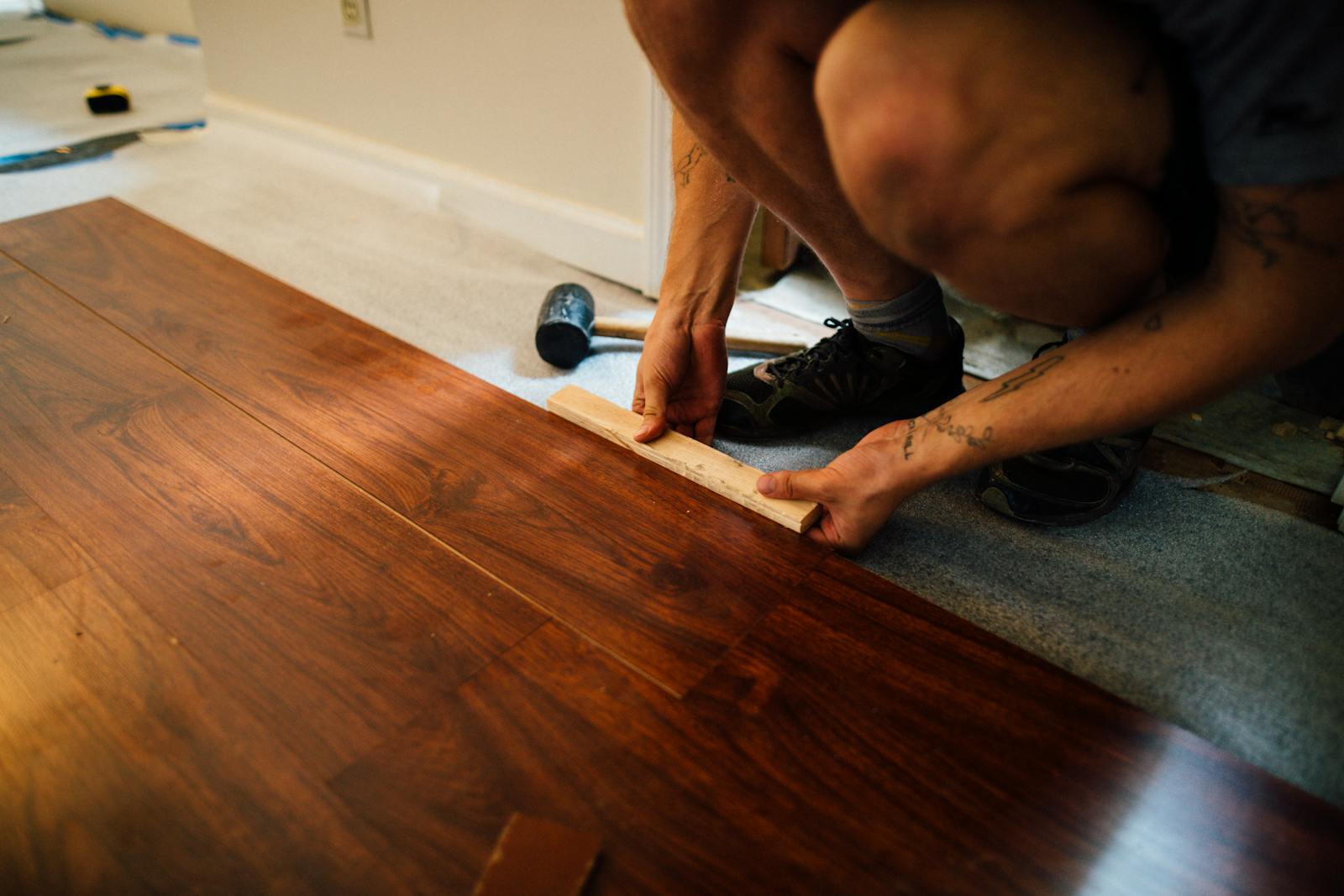
Installation is where LVP saves the most money: most LVP uses a click-lock system that floats over the subfloor, with no nails, glue, sanding, or finish coat, and a careful DIY homeowner can often install LVP in a bedroom over a weekend. Professional LVP installation usually costs $2–$3 per square foot; DIY saves that labour, but you still need tools, spacers, a tapping block, a saw, and time to acclimate the planks.
Hardwood is different: solid hardwood usually needs to be nailed or stapled, acclimated for several days, and then sanded, stained, and sealed on site if unfinished. Professional hardwood installation usually costs $4–$8 per square foot, and it is the recommended route. A poor installation can cause squeaks, gaps, cupping, and an uneven finish that is expensive to fix.
Subfloor preparation and timing
Both floors need a flat, clean, dry subfloor. LVP can hide small imperfections, yet it telegraphs larger dips and can flex if the subfloor is uneven. Hardwood is even less forgiving: an uneven subfloor can cause squeaks and gaps months later. Levelling, patching, and moisture testing can add $1–$3 per square foot. If the subfloor is damp, fix the moisture problem first. No floor will last on a wet base.
4. Durability Compared: Water, Scratches, Pets, and Sunlight
Durability is water resistance, scratch resistance, dent resistance, fade resistance, and repairability. LVP and hardwood score differently on each, so the best choice depends on the room and the household.
Water and moisture
LVP is waterproof in most ranges: its biggest advantage: spills, pet accidents, and splashes wipe up without soaking in, making it a strong choice for kitchens, bathrooms, laundry rooms, and basements. Hardwood hates standing water. A leak or pet accident can stain, cup, or warp boards. Engineered hardwood handles moisture slightly better than solid hardwood, but it is still not waterproof. If water is a regular risk, choose LVP.
Scratches, dents, pets, and sunlight
LVP is scratch-resistant, especially with a 20-mil wear layer, and handles pets and kids well. It can still dent under heavy furniture, and deep scratches cannot be sanded out. Hardwood scratches more easily, especially softer species and dark finishes. But its advantage is repair: a scratched hardwood floor can be screened and recoated, or fully refinished, and look new again. A scratched LVP plank usually has to be replaced.

5. Maintenance and Lifetime Costs
LVP is low-maintenance: sweep or vacuum regularly, damp mop with a pH-neutral cleaner, and wipe spills quickly. Avoid steam mops, harsh chemicals, or abrasive pads unless the manufacturer allows them. No sanding or sealing is needed; the main lifetime cost is replacement after 15–25 years, when the wear layer thins or the pattern looks dated.
Hardwood needs more care, but it rewards it: sweep or vacuum with a hard-floor attachment, use a wood-specific cleaner, and avoid soaking the floor. Use felt pads and mats at entrances. Refinish every 10–15 years and budget for it; a screen and recoat is cheaper than a full sand and refinish, and extends the finish if done before wear reaches bare wood. Our interior design cost calculator guide helps place flooring inside a whole-room budget, and the house building cost calculator does the same at whole-house scale.
6. Resale Value: Which Floor Helps You Sell?
Hardwood usually adds more resale value and buyer appeal, especially in main living areas, bedrooms, and dining rooms: buyers often see real hardwood as a premium feature, and a well-maintained hardwood floor can help a home sell faster and for more, although the exact premium depends on the local market and the quality of the floor.
Good LVP is neutral for resale: it does not usually hurt value if it is a quality range, well installed, and in a sensible colour, but it rarely adds the same premium. In kitchens, bathrooms, basements, and rentals, buyers often prefer waterproof LVP because it is practical. In a starter home you plan to sell within five years, LVP can be smarter, because you may not stay long enough to recover hardwood’s extra cost. More comparisons and calculators live in the Cost Calculator hub.
7. Budget Tiers and Costly Mistakes to Avoid
At under $5 per sq ft installed, LVP is the realistic choice: rigid-core LVP with at least a 12-mil wear layer, a click-lock system, and a waterproof rating. Avoid the thinnest glue-down ranges for main living areas. They show subfloor flaws and wear faster.
At $5–$12 per sq ft installed, you can choose premium LVP or entry-level to mid-range hardwood: premium LVP with a 20-mil wear layer can look very close to wood, and entry-level engineered oak can also fit here. Compare both in your own light before you decide.
At $12–$20+ per sq ft installed, you are in wide-plank hardwood, walnut, hickory, and high-end engineered ranges, for a home you plan to keep for decades, or matching an existing hardwood floor.
Mistakes that add cost
Common mistakes: choosing by material price alone; buying too little and finding the batch sold out; skipping underlayment or a moisture barrier; installing hardwood in a wet room or LVP over a damp, uneven subfloor; and choosing a very dark colour that shows dust. Measure twice, order extra, and fix the subfloor first.
8. Buying Guide and Our Picks
Before you order: decide the room and its water risk; set a total budget; choose the wear layer or species for your traffic; order samples and view them at different times of day; check the warranty; and confirm the installer and the quote.
1. Laser Measure / Long Tape Measure: measure every room before you order
A laser measure or a long tape measure is the first purchase: accurate cuts start with accurate rooms. Measure every room, add the waste allowance, and check the subfloor’s flatness before you order.
- Product: Laser measure / long tape measure
- Link: Check Price on Amazon
- Best for: Measuring rooms, doorways, and cuts before ordering LVP or hardwood.
2. Tapping Block and Pull Bar Installation Kit: tight seams on click-lock LVP
If you install LVP yourself, a tapping block and pull bar kit gets the seams tight without damaging the planks, the small kit that prevents the most common DIY mistakes: gapped joints and chipped edges.
- Product: Tapping block and pull bar installation kit
- Link: Check Price on Amazon
- Best for: DIY click-lock LVP installation with tight, clean seams.
3. Pinless Moisture Meter: check the subfloor before you start
A pinless moisture meter tells you whether the subfloor is dry enough before a single plank goes down, the check that prevents the most expensive flooring mistake. No floor lasts on a wet base, so test first, especially in basements, bathrooms, and ground floors.
- Product: Pinless moisture meter
- Link: Check Price on Amazon
- Best for: Checking subfloor moisture before installing LVP or hardwood.
9. Frequently Asked Questions
Is luxury vinyl plank cheaper than hardwood?
Yes, luxury vinyl plank is typically about half the installed cost of hardwood, and DIY installation can save more. LVP material usually costs $2–$7 per square foot, while hardwood costs $6–$15, and installation is faster and cheaper for LVP. Over a long period, hardwood can close the gap: it lasts 50–100 years with refinishing, while LVP usually lasts 15–25 years and then needs full replacement.
Does LVP look like real wood?
Modern LVP looks very close to real wood at normal viewing distance, especially premium ranges with embossed texture and a matte finish. Up close, hardwood still wins on depth, grain variation, and feel underfoot, because it is real wood rather than a printed image. Order samples, compare several side by side in daylight, and view them in your own light.
Can LVP go in a bathroom?
Yes, waterproof LVP is one of the best bathroom floors, because it handles splashes, steam, and wet feet without swelling or staining. Choose a fully waterproof range, seal the edges correctly, and make sure the subfloor is dry and level before installation. Avoid hardwood in a full bathroom: standing water and steam can cup, stain, and warp boards over time, even with careful cleaning.

How long does hardwood last?
Hardwood can last 50–100 years with proper care and refinishing, far longer than most other floors. Solid hardwood can usually be refinished three to five times, while engineered hardwood can be refinished fewer times depending on its top veneer. Regular cleaning, felt pads, mats, and refinishing every 10–15 years are the keys to reaching that lifespan at home.
Does hardwood increase home value?
Usually, yes: buyers often pay a premium for real hardwood in main living areas, bedrooms, and dining rooms, and agents frequently highlight it as a desirable feature. The exact increase depends on the local market, the quality of the floor, and the overall condition of the home. Good LVP is neutral for resale, but it rarely adds the same premium as well-maintained hardwood in a long-term home.
Is LVP or hardwood better for pets and kids?
LVP is usually better for pets and kids in the short term: it is waterproof, scratch-resistant, and easy to clean after accidents and spills. Hardwood can still work with a harder species and a durable finish, and it can be refinished after years of wear. For kitchens, bathrooms, and play areas, LVP is safer; for living rooms and bedrooms, hardwood can be worth the extra care.
Conclusion
Luxury vinyl plank vs hardwood cost is not a contest between a cheap floor and an expensive floor. It is a choice between a lower upfront cost with easier installation and waterproofing, and a higher upfront cost with a longer life and stronger resale appeal. If budget and water resistance matter most, choose LVP. If you want a floor that lasts a lifetime and adds value, choose hardwood. Measure your rooms, get two quotes, and compare total cost, not price per square foot.

My name is Mahi Uddin, and I’m a blog writer with over two years of experience specializing in creating engaging, informative content using AI tools. I contribute to InExDecor.com, where I share creative ideas and practical tips for transforming interior and exterior spaces into beautiful, functional environments. With a passion for storytelling and a knack for blending creativity with technology, I strive to craft blogs that not only inform but also inspire readers. When I’m not writing, you can find me exploring design trends or enjoying a good book with a cup of coffee.