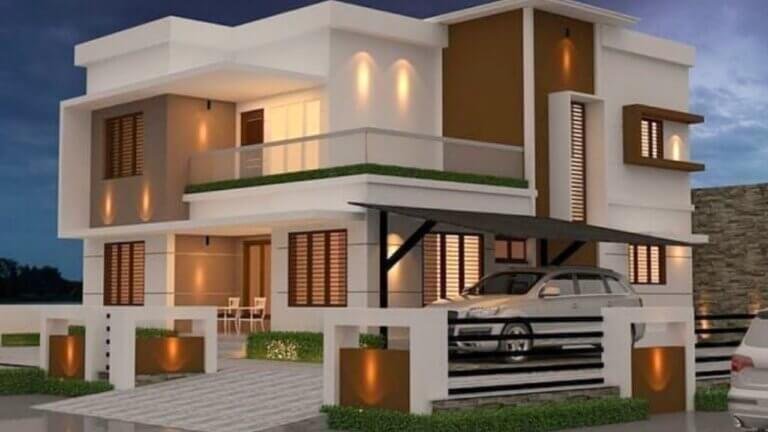
Small house exterior design is about making a compact home look larger and more polished, not about making it look like a big house. The recipe is simple: light colors that reflect light, vertical lines that draw the eye upward, warm lighting that opens the house after dark, compact landscaping that frames the home, and strict clutter control so nothing competes with the house itself.
This guide shows how each of those ideas works on a small house, in the order that matters most. For the wider context, our complete guide to designing a house exterior covers the same decisions for homes of any size, and our step-by-step planning guide puts them in the right sequence.
Make a Small House Look Larger With Color
Color is the easiest way to make a small house look bigger, because light colors reflect more light and make walls read as further away. Pale whites, soft grays, warm off-whites and light sage all make a small facade look more open, while a very dark body color can make the same house look smaller and heavier. Keep the trim close to the body color rather than using a stark contrast, because a single, calm surface reads as one larger plane; save dark colors for the front door or a small accent, where they add depth without shrinking the house.
Test colors the same way you would on a larger home — large samples, in real daylight, from the street — because a color that looks soft close up can be too pale or too bright at a distance. Our guide to choosing exterior house colors explains the 60-30-10 rule and how light changes color through the day. On a small house, also check the color against the roof and the neighbors: a light body color that matches the street will look settled, while a color that is much darker than the houses around it will make yours stand out as smaller.

Credit: www.linkedin.com
Add Vertical Lines and a Clear Focal Point
Vertical elements make a small house look taller, which makes it look larger overall. Tall, narrow windows, vertical siding boards, a tall front door with a slim sidelight, and a porch post that runs the full height of the porch all draw the eye upward. Avoid wide, horizontal bands that cut the facade in half — a strong horizontal trim line or a dark, heavy band across the middle will make the house look shorter and wider than it is.
Give the front one clear focal point, and let it be the front door. A bright or deep-colored door, a simple porch roof above it and a clear path leading to it tell visitors where to look, and they make the rest of the facade feel calm rather than busy. Our guide to the front of the house and curb appeal shows how the entry, porch and path work together. Keep the rest of the front quiet: one door color, matching hardware and house numbers, and no competing features on a small facade.

Credit: www.youtube.com
Light It Well, Day and Night
Light makes a small house feel larger, and it costs far less than adding space. Keep windows clean and unobstructed, choose window treatments that let daylight in, and trim any planting that blocks light from the front windows. A small house with bright, visible windows looks open and welcoming from the street; the same house with shaded, hidden windows looks closed and smaller.
After dark, warm lighting does the same work. A porch light by the door, a light on the path and one light that highlights a tree or a texture on the wall are enough — too many fixtures will clutter a small front. Solar path lights are inexpensive and easy to install, and they make the walk to the door safe and welcoming. Check the lighting from the street at dusk: the house should glow gently, with the door as the brightest point, not glare from one harsh fixture.
Compact Landscaping That Frames, Not Hides
On a small lot, landscaping should frame the house, not hide it. Keep shrubs below the windowsills, leave the front door and windows fully visible, and use a few low, compact plants rather than one large shrub that swallows the facade. A clear, straight path to the door, a mowed and edged lawn, and a single small tree to one side will make the house look larger than a yard crowded with beds and ornaments.
Choose plants for scale as well as for looks: a plant that is the right size for the house today will still be the right size in a few years, while a fast-growing shrub will soon hide the windows you worked to keep clear. Native, low-maintenance plants are a good choice because they need less water and care. A small patio or seating area near the door, in proportion to the house, adds a place to sit without taking over the yard — and it makes the home feel larger by giving the outside a purpose.

Credit: hover.to
Control Clutter and Keep Details in Scale
Clutter shrinks a small house faster than anything else. Remove anything that does not earn its place on the front: broken pots, leaning tools, extra furniture, bins in view and decorations that do not match the style of the house. Store bins and tools out of sight, keep the porch clear except for one or two considered items, and sweep the path and driveway regularly. A clean, empty porch makes a small house look larger; a crowded one makes it look smaller and less cared for.
Keep every detail in scale with the house. House numbers, the mailbox, the porch light and any planters should be in proportion — oversized items overwhelm a small facade, while tiny ones get lost. Match the finishes, as with any exterior: the same metal for the handle, numbers and light makes the front look planned. If money is tight, start with the cheapest changes first; our guide to designing a house exterior on a budget orders them by impact. Browse more exterior design ideas for small homes, and remember that on a small house, doing less — and doing it well — is usually the best design.
Frequently Asked Questions
What color makes a small house look bigger?
Light colors make a small house look larger because they reflect more light — pale whites, soft grays, warm off-whites and light sage all work well. Keep the trim close to the body color and save dark colors for the front door or a small accent.
How can I make the front of a small house look taller?
Use vertical lines: tall, narrow windows, vertical siding, a tall front door and full-height porch posts all draw the eye upward. Avoid wide horizontal bands that cut the facade in half and make the house look shorter.
What landscaping suits a small house?
Compact, low plants that frame the house without hiding it, kept below the windowsills, with a clear path to the door and a mowed, edged lawn. One small tree to one side is enough; a crowded yard makes the house look smaller.
How do I light a small house exterior?
Use three layers: a warm porch light by the door, solar path lights to guide visitors, and one light that highlights a tree or wall texture. Check it from the street at dusk, with the door as the brightest point.
What should I remove from a small house exterior?
Remove clutter first: broken pots, leaning tools, extra furniture, bins in view and decorations that do not match the house. A clean porch and a clear path make a small house look larger and better cared for.
Conclusion
A small house does not need to look small. Light colors, vertical lines, warm lighting, compact landscaping and strict clutter control will make it look larger and more polished — and most of those changes cost far less than adding space. Start with color and clutter, then light and landscape, and your small house will look its best from the street.

My name is Mahi Uddin, and I’m a blog writer with over two years of experience specializing in creating engaging, informative content using AI tools. I contribute to InExDecor.com, where I share creative ideas and practical tips for transforming interior and exterior spaces into beautiful, functional environments. With a passion for storytelling and a knack for blending creativity with technology, I strive to craft blogs that not only inform but also inspire readers. When I’m not writing, you can find me exploring design trends or enjoying a good book with a cup of coffee.