
Good home exterior curb appeal means a front that looks cared for, welcoming and easy to read: a clear path to a visible front door, balanced planting and trim, and a driveway and garage door that do not fight the house. You do not need a large budget or a new facade — most of the effect comes from the entry, the approach and a tidy, symmetrical arrangement.
This guide focuses on the front of the house only: the entry and porch, symmetry, the driveway and path, and the garage door, with a first-impression checklist at the end. For the whole exterior, our complete guide to designing a house exterior covers the bigger picture, and our step-by-step planning guide puts the front-of-house work in its proper order.
The Front of the House Is the First Impression
Stand on the street and look at your house the way a visitor does, for the first few seconds. What do you see first — the front door, the garage, a bush, or nothing in particular? A strong front has one clear focal point, usually the front door, and everything else leads the eye toward it. If the garage door is bigger and brighter than the entry, or if planting hides the door, the first impression is confusion rather than welcome.
Take a photo from the street and from the end of the driveway, at different times of day, and note what distracts you: peeling paint, a cracked path, a sagging gutter, bins in view, or a lawn that needs edging. Fix what distracts before you add anything new, because a tidy, simple front always beats a decorated one with visible problems. The front is also where small changes pay off fastest — a painted door, a clean path and trimmed planting can change the whole look of a house in a weekend, as our guide to designing a house exterior on a budget shows.
Make the Entry and Porch Welcoming
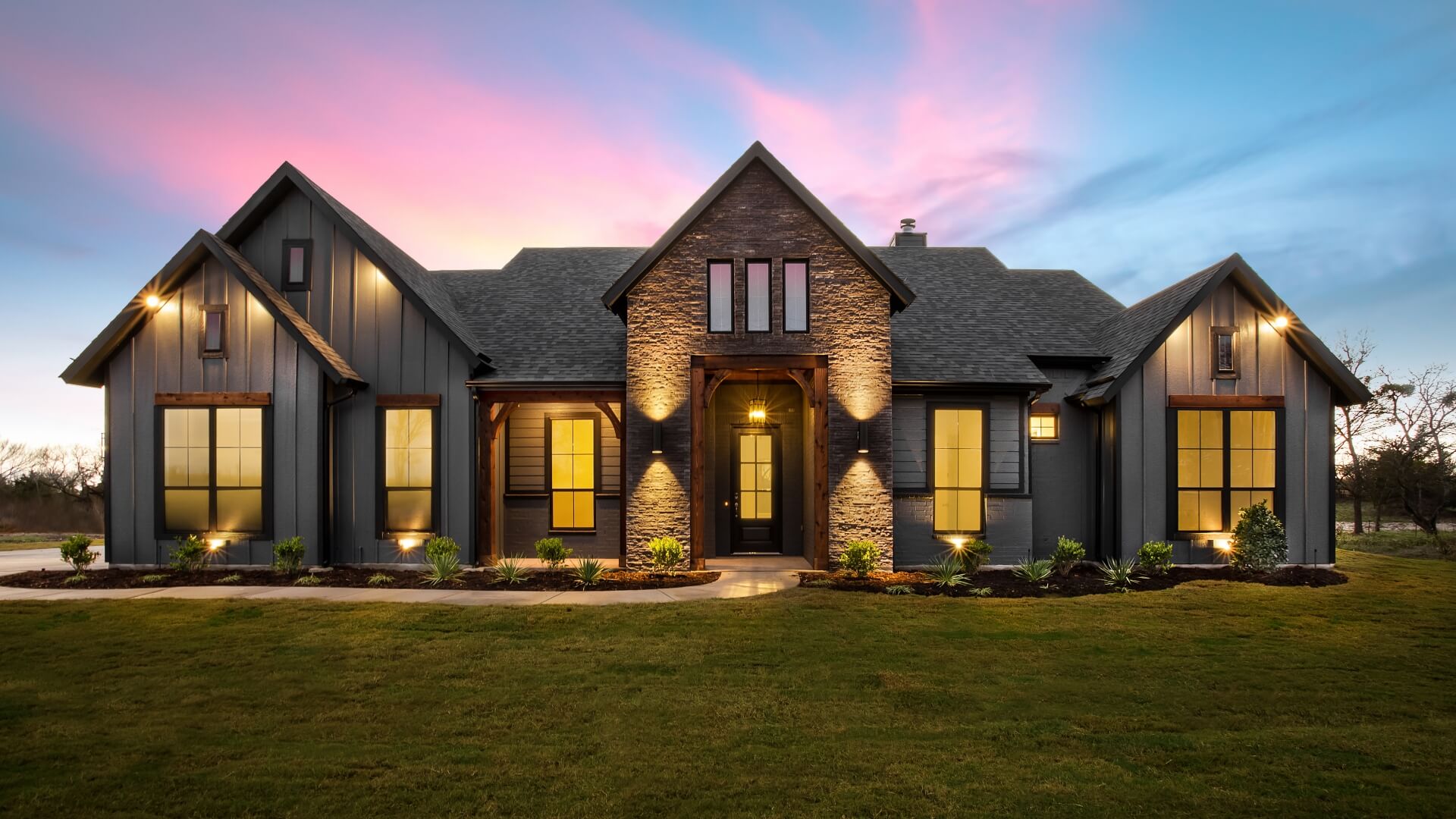
The entry is the heart of curb appeal. Start with the front door: a fresh color that contrasts with the body of the house, clean hardware in a single finish, and a porch light that actually lights the door at night. A deep navy, forest green, brick red or black door works on most homes, and our guide to choosing exterior house colors explains how to pick a door color that suits the body color and the roof. A doormat in proportion to the door, a pair of planters or lanterns, and house numbers that are easy to read from the street complete the entry without cluttering it.
The porch itself should be clean, dry and uncluttered. Sweep it, wash the steps, and remove anything that does not belong there — shoes, tools, broken pots. If the porch is large enough, one chair or a small bench makes it feel lived in; if it is small, keep it empty and let the door and light do the work. Check the porch at night, too: a warm light by the door, a light on the path and no dark corners make visitors feel safe and welcome, and they make the house look its best after dusk.
Credit: www.build-review.com
Use Symmetry and Balance to Make the Front Read Clearly
Symmetry is the quickest way to make a front look designed rather than accidental. If your house has a centered door, mirror the planting, lights and planters on each side of it. If the door is off-center, balance it instead: a larger planting or a taller light on the shorter side, and a smaller one on the longer side, so the eye rests in the middle. Balanced fronts photograph better, look tidier from the street and make even a plain house feel intentional.
Keep the palette and materials consistent across the front. Two or three colors — body, trim and one accent for the door — are enough, and the finishes should match: the same metal for the door handle, house numbers, mailbox and porch light, and the same style of planting on both sides. On a small house, symmetry and restraint matter even more, because there is less facade to hide mistakes; our guide to small house exteriors shows how to use vertical lines and light colors to make a small front look larger. Trim planting so it does not hide the windows, keep shrubs below the windowsills, and let the architecture show.
The Driveway, Path and Garage Door
The driveway and path are part of the first impression, so treat them as design, not just surfaces. Sweep and wash the driveway, fill cracks, and edge the lawn where it meets the path. A clear, direct path from the driveway or street to the front door — wide enough for two people to walk side by side, with no step down into a puddle — makes the entry feel welcoming. If the path splits or wanders, visitors hesitate; if it leads straight to the door, they do not have to think at all.
The garage door deserves the same attention, because on many houses it is the largest single surface on the front. A garage door painted in the body color or a tone close to it will recede and let the entry stand out, while a bright or contrasting garage door competes with the front door and dominates the facade. Keep it clean, matching the trim where possible, and avoid parking bins or a second car in front of it. The goal is a front where the eye goes to the door first, the garage second, and nothing else fights for attention.

Credit: www.linkedin.com
A First-Impression Checklist
Walk the approach as a first-time visitor would, from the street to the front door, and check each point. Can you see the front door clearly from the street, and is the path obvious? Is the door color fresh, the hardware clean and the house numbers readable? Are the porch light and path lights working, and does the porch look clean and dry? Is the driveway swept, the lawn edged, and the planting trimmed below the windows? Is the garage door clean and in a color that lets the entry lead?
Fix the items that fail before you spend anything on decoration, and do the walk again after dark, when lighting changes everything. A front that passes this checklist at dusk — clear path, lit door, tidy planting, quiet garage — is a front with curb appeal. For more ideas in the same spirit, browse our exterior design ideas, and keep the checklist for a seasonal repeat: a quick walk every few months is enough to keep the first impression strong.

Credit: allurausa.com
Frequently Asked Questions
What is curb appeal?
Curb appeal is how attractive a house looks from the street, especially the front. It is the combined effect of the entry, porch, path, driveway, garage door, planting and lighting — a front that looks cared for and welcoming.
What is the first thing to fix for curb appeal?
Start with the front door and the path to it: clean, paint or replace the door, make the path clear and well lit, and trim planting that hides the entry. Those are the changes a visitor notices first.
How can I make the front of my house more symmetrical?
Mirror planting, lights and planters on each side of a centered door. For an off-center door, balance it with a larger planting or taller light on the shorter side, so the front still reads as one balanced design.
Should the garage door match the house color?
Yes, in most cases. Painting the garage door in the body color or a close tone makes it recede and lets the front door stand out. A bright or contrasting garage door competes with the entry and dominates the front.
How do I check my home’s curb appeal?
Walk from the street to the front door as a visitor would, in daylight and after dark. Check that the door is visible, the path is clear, the lights work, the planting is tidy and the garage door does not dominate the front.
Conclusion
Curb appeal is not a renovation; it is a clear path, a welcoming entry, balanced planting and a garage door that knows its place. Fix the distractions, make the front door the focal point, and check the result from the street at dusk — that is how a house makes a good first impression every day.

My name is Mahi Uddin, and I’m a blog writer with over two years of experience specializing in creating engaging, informative content using AI tools. I contribute to InExDecor.com, where I share creative ideas and practical tips for transforming interior and exterior spaces into beautiful, functional environments. With a passion for storytelling and a knack for blending creativity with technology, I strive to craft blogs that not only inform but also inspire readers. When I’m not writing, you can find me exploring design trends or enjoying a good book with a cup of coffee.


